
About Slovenia
Slovenia at a Glance
Slovenia, the fourth smallest member of the European Union, surprises everyone with its incredible natural and cultural diversity. Slovenia is the only country with LOVE in its name which connects diversities.
Slovenia’s natural beauty is astonishing, and it would be more accurate to speak of the country’s beauties.
Slovenia is half the size of Switzerland and almost exactly the size of Wales or Massachusetts.
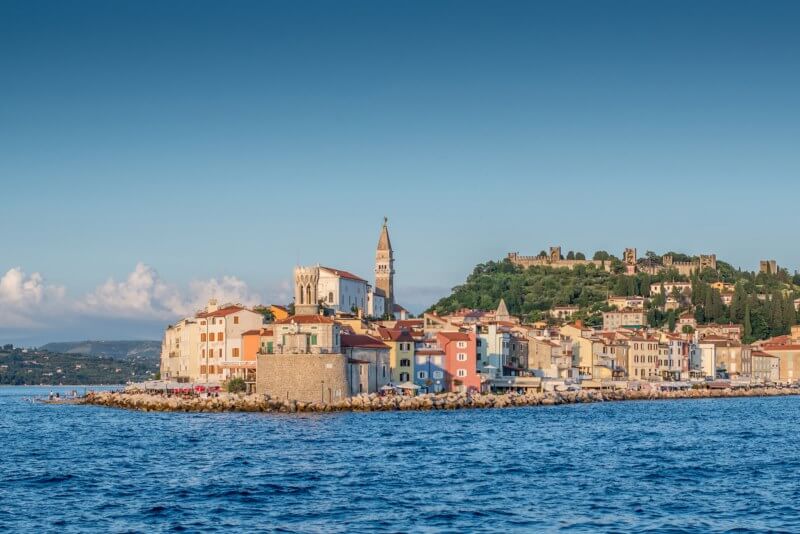

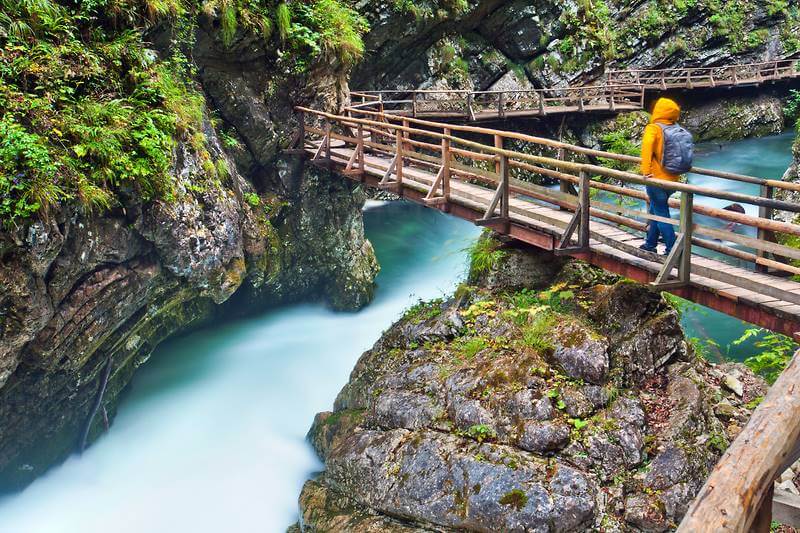
A Slovenian legend has it that when God was allotting nature’s bounty, he initially forgot this country. His last-minute solution was to take bits of the best from other places: gorgeous Alpine ranges, the less craggy Pohorje Mountains, the Pannonian Plain stretching toward Hungary, hill after hill rolling southward into the horizon, the unique karst landscape, rivers aplenty, and a few miles of Adriatic coastline. There’s even a disappearing body of water here – for much of the year Lake Cerknica is dry but, come the spring rains, the basin fills to become a massive, shallow lake.
“The first has to be the people obviously, fantastic, down to earth, friendly people. Second is the landscape as you fly into Ljubljana Airport you see the forests and the mountains all around you, you can’t beat it and the third is probably the little town of Bled, which if you haven’t been you should go to, it’s absolutely stunning.” Carina Bauer, CEO, IMEX Group; on three things about Slovenia.
Come travel with us, Go To Slovenia Travel
Slovenia in numbers
Population: approx. 2,120,000
Location: Slovenia is a Central European country.
Area: 20,273 km² (7,827 sq mi)
Government: Slovenia is a democratic republic founded on the principle of the separation of legislative, executive, and judicial powers.
Capital city: Ljubljana – population approx. 295,000.
President of the Republic: Nataša Pirc Musar (since 23 December 2022)
Prime Minister: Robert Golob (since 1 June 2022)
President of the National Assembly: Urška Klakočar Zupančič
International affiliations: Slovenia has been a member of the European Union since 1 May 2004 and NATO since 29 March 2004. It is also a member of numerous other international organisations.
Administrative division: 58 administrative units and 212 municipalities.
Other major cities: Maribor, Kranj, Celje, Koper, Novo mesto, Velenje, Murska Sobota.
Official language: Slovene; Hungarian and Italian are co-official in ethnically mixed areas.
Religion: The majority of the population identifies as Roman Catholic; Slovenia also has dozens of officially registered religious communities.
Currency: Euro (EUR), in use since 1 January 2007.
GDP per capita: approx. 34,000 USD (current, nominal)
Registered unemployment rate: around 3.8–4.5% (recent average)
Average age: approx. 44 years
Life expectancy: men approx. 78 years, women approx. 84 years
Average number of children per woman: approx. 1.6
Climate: Alpine, Pannonian, and Mediterranean.
Time zone: Central European Time (CET) GMT +1; Central European Summer Time (CEST) GMT +2.
Average temperatures: July approx. 21°C (70°F), January approx. 0°C (32°F)
Mains voltage: 230 V
Units of measurement: Metric system – metres, kilometres, grams, kilograms. Temperatures are expressed in degrees Celsius.
Length of borders:
• Austria: 330 km (205 mi)
• Italy: 280 km (174 mi)
• Hungary: 102 km (63 mi)
• Croatia: 670 km (416 mi)
Total: 1,382 km (859 mi)
Length of coastline: 46.6 km (29 mi)
Highest peak: Triglav – 2,864 m (9,396 ft)
Geometric centre of Slovenia: Vače
Average elevation: 556.8 m (1,827 ft)
Universities: University of Ljubljana, University of Maribor, and University of Primorska.